
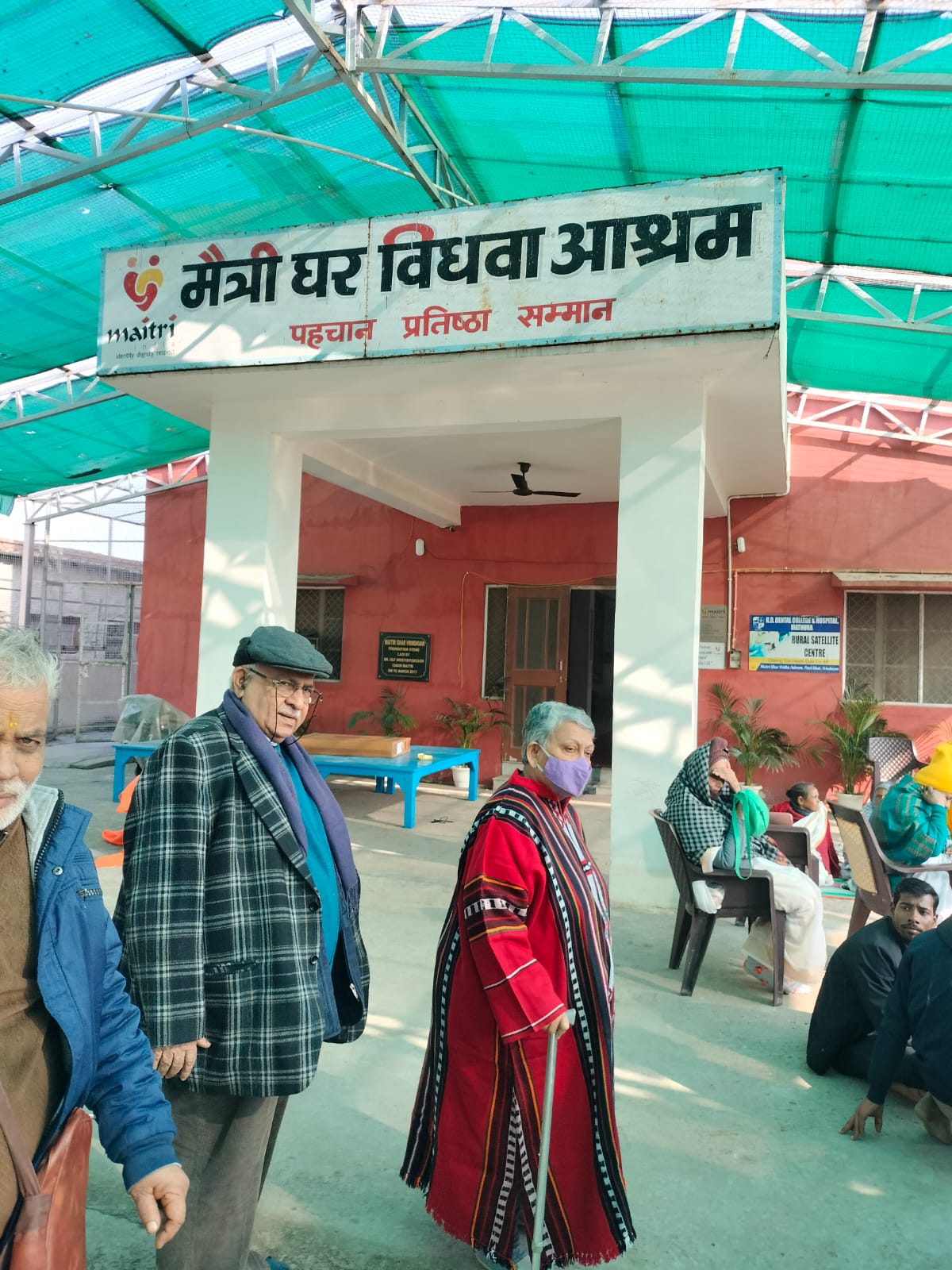
On 12 January 2026, Ms. Roma Debabrata, Founder of Ramola Bhar Charitable Trust (RBCT), along with Mr. Debabrata Chakraborti, visited one of the widow-welfare homes, called Maitri Ghar Vidhwa Ashram in Vrindaban, Uttar Pradesh. The visit was undertaken to extend support to elderly widows residing at the Ashram and to observe the living conditions and facilities available to them.
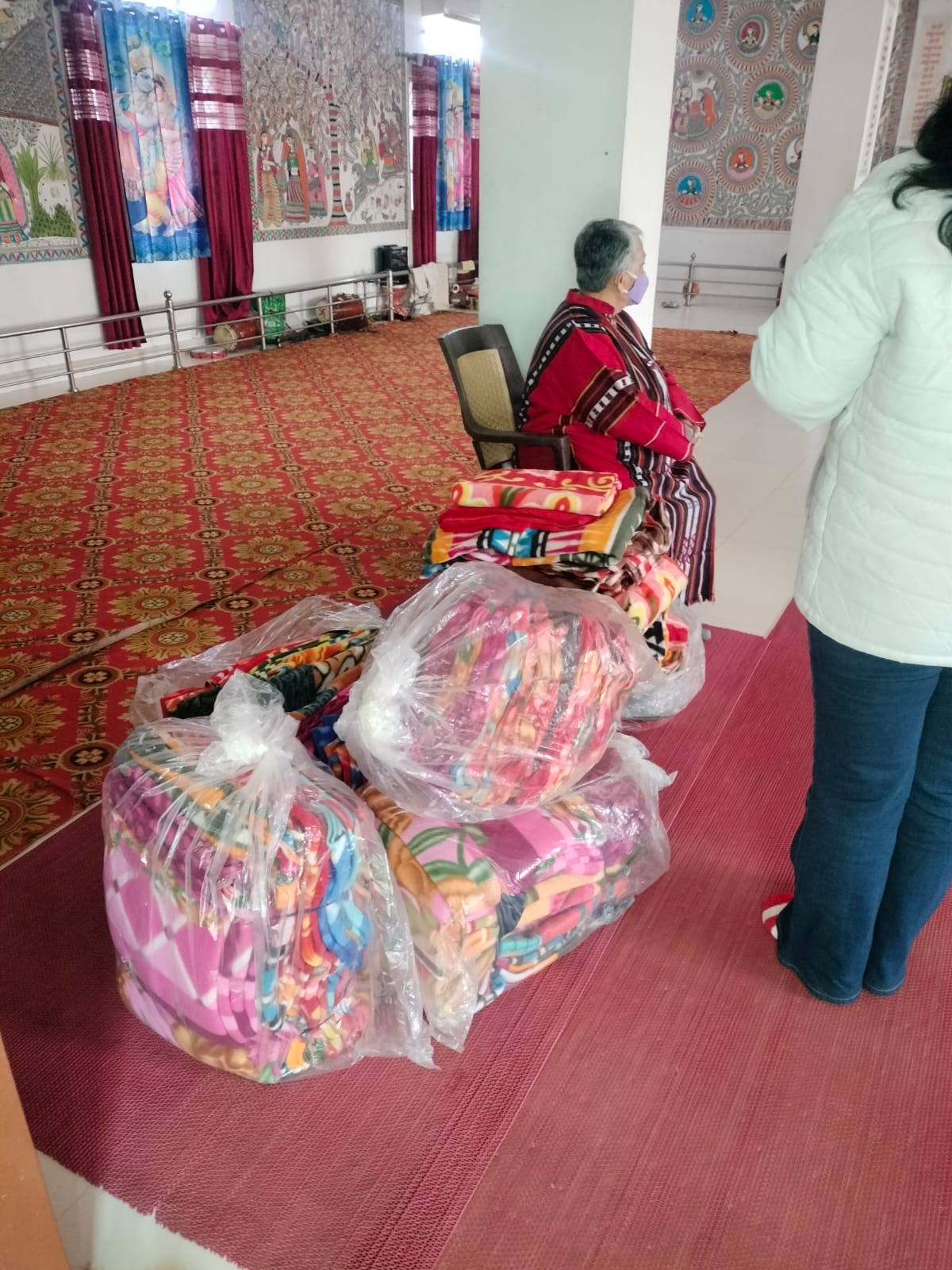
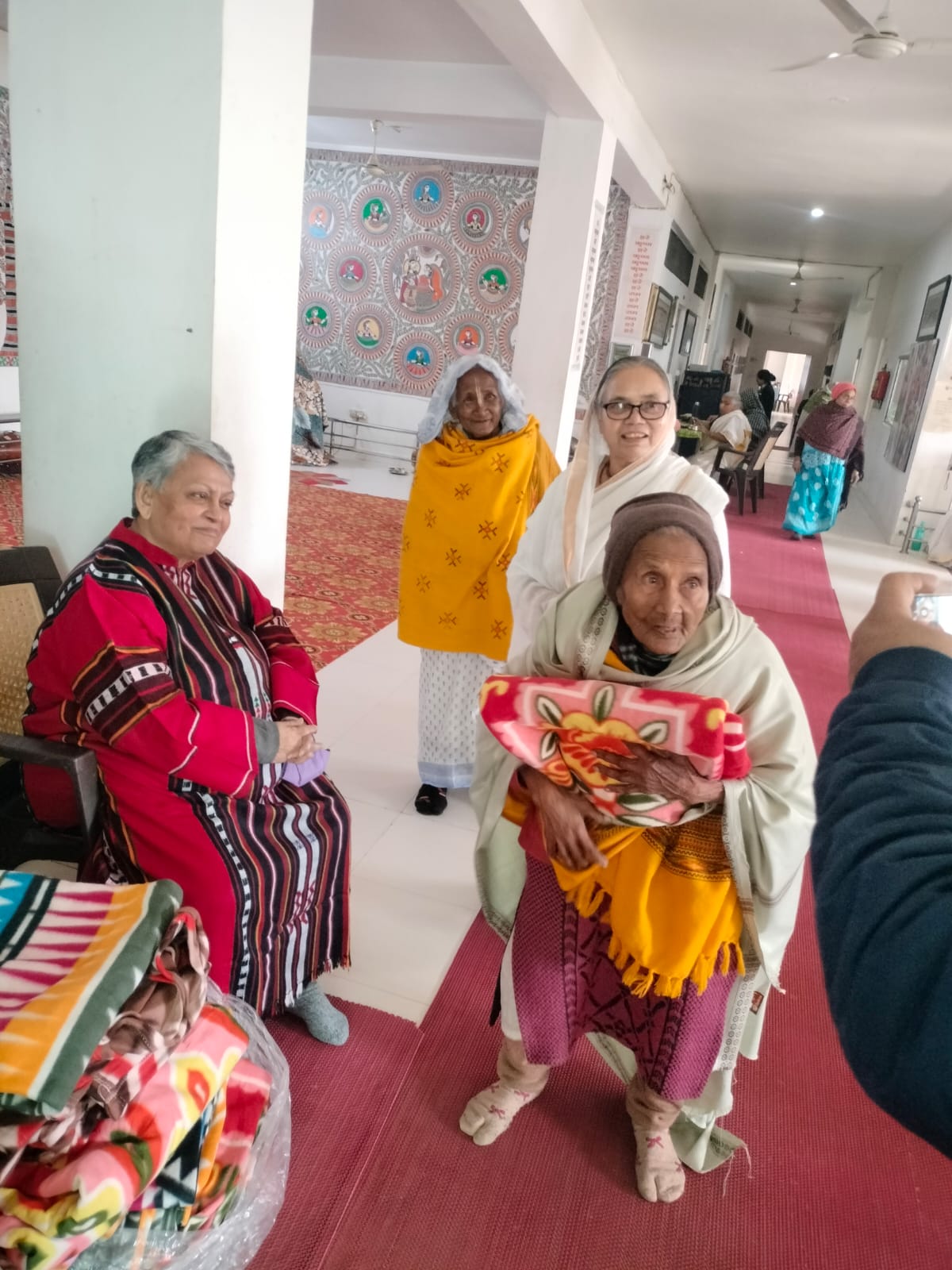
During the whole visit, a total of 125 blankets were distributed to different widows in view of the winter season. In addition, a token amount of financial assistance was provided individually to each widow as a gesture of care and solidarity.
It was observed that nearly 95 percent of the widows residing at the Ashram were Bengali women. The residents appeared well cared for and maintained with dignity. A notable observation was a 109-year-old woman who was still actively engaged in work, reflecting the supportive environment of the Ashram.
The overall living conditions at Maitri Ghar Vidhwa Ashram were found to be satisfactory. Medical facilities were available and accessible. The quality and quantity of food provided were adequate. The ambience of the Ashram was clean and well maintained, and appropriate security arrangements were in place to ensure the safety of the residents. It was also noted that the Akshaya Patra Foundation, a non-governmental organisation, provides daily meals to the residents, ensuring regular food support.
The visit highlighted the importance of collective efforts in ensuring dignity, care, and well-being for elderly widows, and reaffirmed RBCT’s commitment to supporting such welfare initiatives.
Historical Background
From the nineteenth century into the early twentieth century, widowhood among women in Bengal was closely connected to the widespread practice of child marriage. Girls were often married at a very young age, frequently to men much older than themselves. Given poor health conditions and lower life expectancy, many men died early, leaving behind widows who were still adolescents or young adults.
Social Conditions in Bengal
Widowhood was socially not acceptable, particularly if they were young women. Widows were excluded from normal family and social life, and remarriage was discouraged or prohibited in many communities. Young widows who were pregnant or had small children faced even stronger rejection, as their situation was viewed as a social burden and a source of stigma for the family.
Displacement to Vrindaban
Families that were unwilling or unable to support widows often sent them away, sometimes under the pretext of pilgrimage or moral duty. Over time, Vrindaban became one of the places where such women accumulated because it had shelters, informal support networks, and a long history of receiving abandoned widows. This pattern continued for decades, resulting in a large population of widows from Bengal living in the town.
Life in Vrindaban
For many years, widows lived in conditions of extreme precarity. Survival depended on begging, group singing in exchange for small amounts of food or money, and charity. Most had no stable income, limited access to healthcare, and little possibility of returning to family life. Language barriers further isolated Bengali widows from the local population.
Reform and Continuing Reality
Legal reforms and social movements challenged child marriage and restrictions on widow remarriage over time, leading to a reduction in the creation of very young widows. Laws addressing child marriage and recognising widows’ rights altered formal norms, but did not undo the consequences of earlier practices. Many women who had already been displaced remained in Vrindaban throughout their lives, ageing within institutional shelters and informal systems of care. The continued presence of elderly widows from Bengal reflects the long-term effects of child marriage, social exclusion, and delayed social reform rather than an ongoing movement of abandonment.


 stopglobalmovement.com