
NDMC Convention Centre, New Delhi | 12–13 January 2026
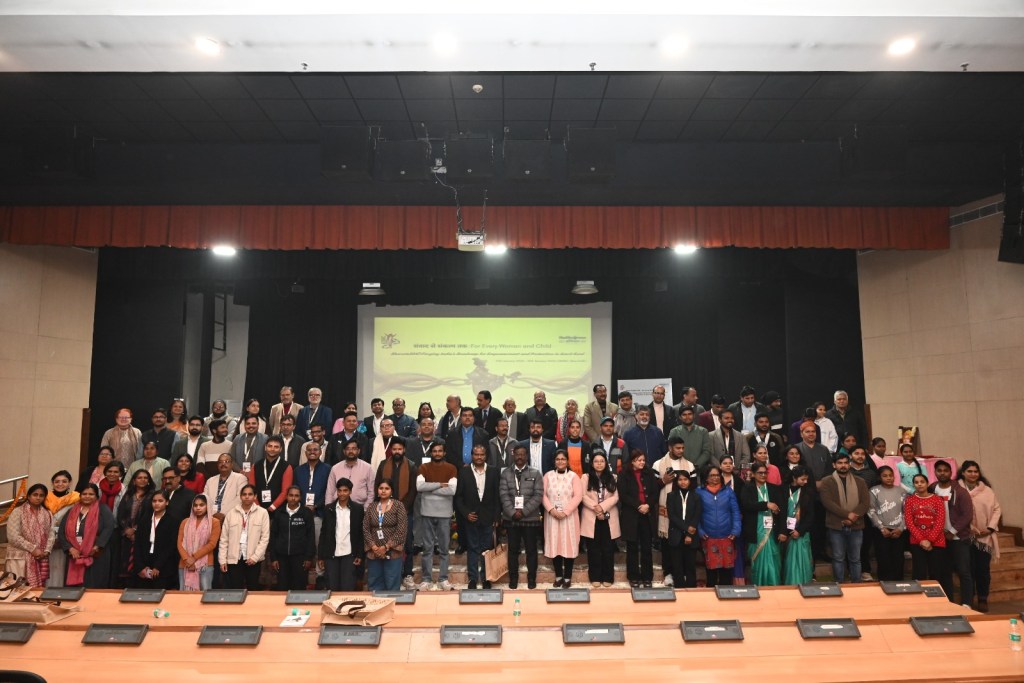
STOP (ATSEC- Delhi Chapter) participated in the two-day National Symposium on Women and Child Development held at the NDMC Convention Centre, New Delhi, organized by ATSEC- Jharkhand Chapter. The organization was represented by Executive Director Smritikana Ghosh Paul, Project Coordinator Narayani Bhattacharya and Project Associate Paridhi Negi. The symposium convened representatives from government institutions, civil society organisations, policy experts, and practitioners to reflect on existing challenges and strengthen protection systems for women and children across India.
During the symposium, Smritikana Ghosh Paul, ED, shared insights drawn from STOP’s extensive field experience, emphasising the importance of a prevention-first approach to addressing human trafficking. The organisation highlighted how unsafe migration, socio-economic vulnerabilities, and structural gaps continue to expose women and children to exploitation, underscoring the need for early identification and community-level interventions.
Key issues presented by STOP included critical gaps in source area mapping, which limit proactive identification of vulnerable communities, and the misconception that the absence of registered cases—such as in AHTUs in Uttarakhand—equates to the absence of trafficking. STOP stressed that underreporting and weak outreach often mask the true scale of the problem. Field-based interventions undertaken by STOP in West Bengal, Himachal Pradesh, Uttarakhand, and Delhi were shared as practical examples of prevention, coordination with law enforcement, and survivor support.
The organisation also drew attention to the shrinking shelter home infrastructure in several states, highlighting the growing protection gap for survivors due to the withdrawal of NGOs from shelter operations. Positive examples of effective government–NGO collaboration from Himachal Pradesh were presented to demonstrate how coordinated responses can significantly strengthen prevention and protection mechanisms.
Ms. Smritikana Ghosh Paul, Executive Director of STOP, participated as a panellist in the session on women and child trafficking, contributing to discussions on trends, vulnerabilities, and survivor-centric responses. The session concluded with an interactive question-and-answer segment, allowing for deeper engagement with participants.
STOP also set up an exhibition stall that remained active throughout both days of the symposium. The stall showcased awareness materials on human trafficking, unsafe migration, child marriage, and child protection, facilitating dialogue and collaboration with a wide range of stakeholders.
Through its participation, STOP reaffirmed its commitment to prevention, protection, and survivor-centric action, and to working collaboratively with government and civil society to ensure the rights, safety, and dignity of women and children.

 stopglobalmovement.com