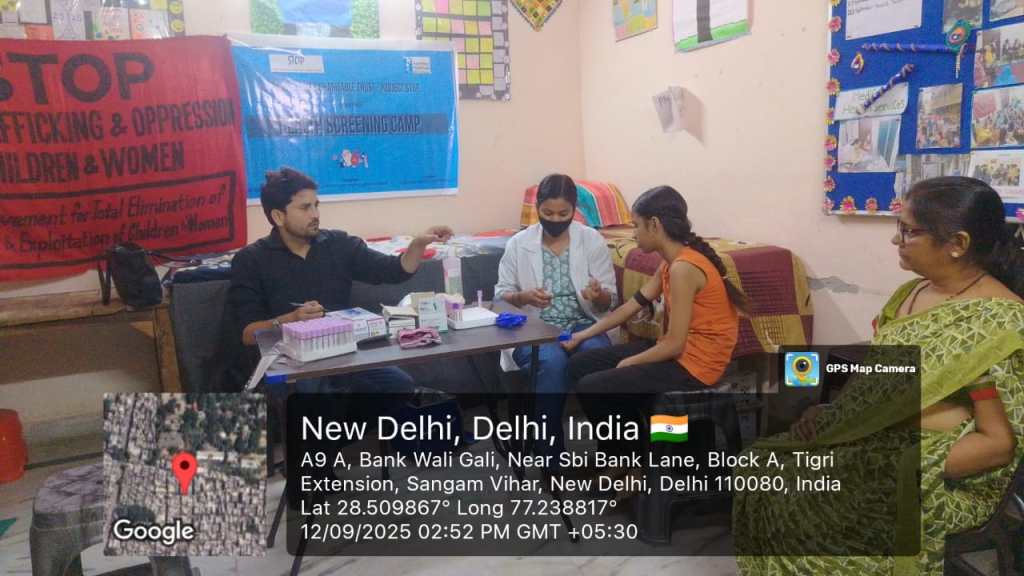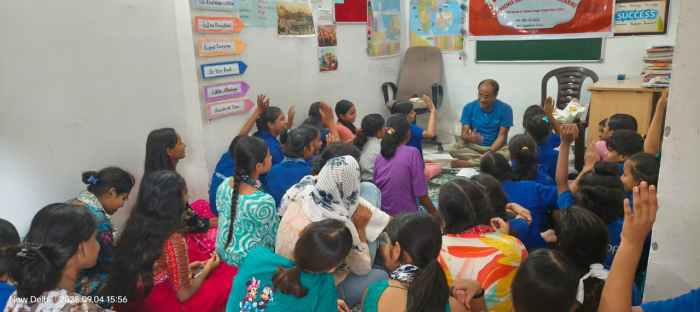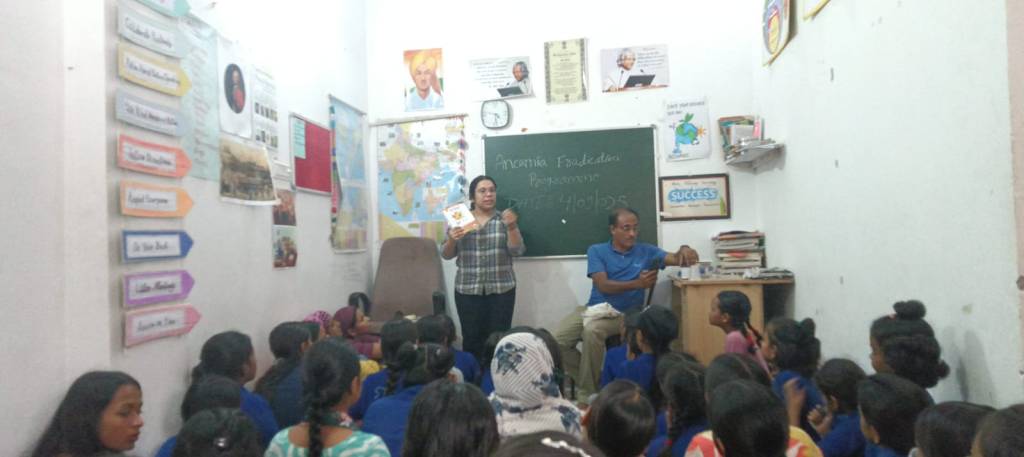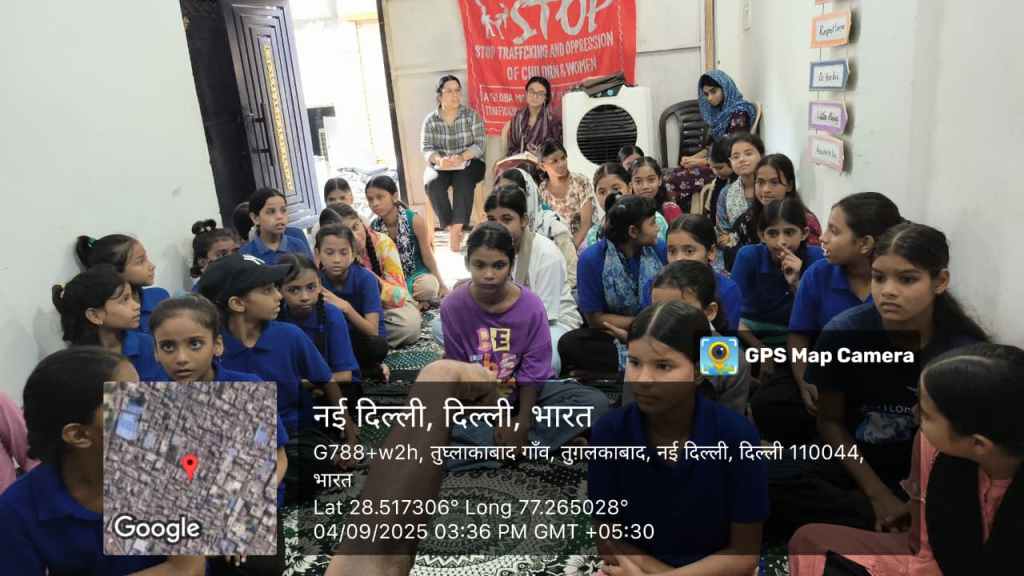
On 29th July 2025, STOP commemorated World Day Against Trafficking in Persons (TIP Day) with a vibrant and deeply moving community event held within its field intervention areas with an audience of 120 eager women, young girls and children. The celebration served as both a tribute to the courage of survivors and a bold call to action for everyone to combat human trafficking at the grassroots level.
The event opened with a gripping nukkad natak (street play) that laid bare the grim realities of how trafficking operates at the ground level—from deception to exploitation—urging spectators to recognize the signs and act against it. This was followed by a gripping nukkad natak (street play) stirring dance performance, symbolizing strength, resistance, and the unwavering confidence of communities in standing up against trafficking. A heartfelt poetry recitation encouraged every attendee to take a personal pledge against human trafficking, adding an emotional and reflective depth to the gathering.
Audience members spontaneously stepped forward to share their insights, with many expressing how STOP’s continued efforts have transformed their understanding of trafficking—not just as a crime, but as a systemic issue tied to socio-economic vulnerabilities.
Two distinguished guest speakers added powerful perspectives to the event:
- Retd. IAS Officer Amitava Bhattacharyya emphasized that while every individual perceives trafficking differently, the collective fight must remain united and uncompromising, as human trafficking is intricately connected to other forms of organized crime.
- Prof. (Dr.) Ranjana Bhattacharya echoed the call for unity, stating that the strength of our resistance lies in breaking the barriers—legal, social, and cultural—that enable trafficking to persist.
Hosts Manpreet Kaur and Saanvi Rajput, both staff members of STOP, guided the event with empathy and resolve, repeatedly emphasizing the role of small yet profound actions in making communities resilient to trafficking.
Narayani Bhattacharya, Documentation Officer of STOP, shed light on how trafficking infiltrates homes and neighborhoods and underscored the importance of building household-level awareness. She passionately highlighted the cross-border vulnerabilities in Darjeeling, Southern West Bengal, and Uttarakhand, reminding participants of the critical role of mahila mandals and youth groups in identifying and preventing trafficking networks.
Poonam Choudhary, Field Coordinator, and Mamta Gopal, Centre-In-Charge, spoke about the long-term, often irreversible impacts of human trafficking on victims, families, and communities. They urged everyone to take the pledge not just in word but in practice—by staying vigilant, informed, and united.
The event concluded with a vote of thanks by Paridhi Negi, Project Associate at STOP, who acknowledged the unwavering support of the community, the dedication of STOP’s Founder and staff, and the generosity of the local space-providers who made the day possible.
STOP’s TIP Day celebration was not just a commemoration—it was a reaffirmation. A reaffirmation of solidarity, courage, and the will to dismantle trafficking networks.