Blog

Anemia Eradication Programme | Tigri

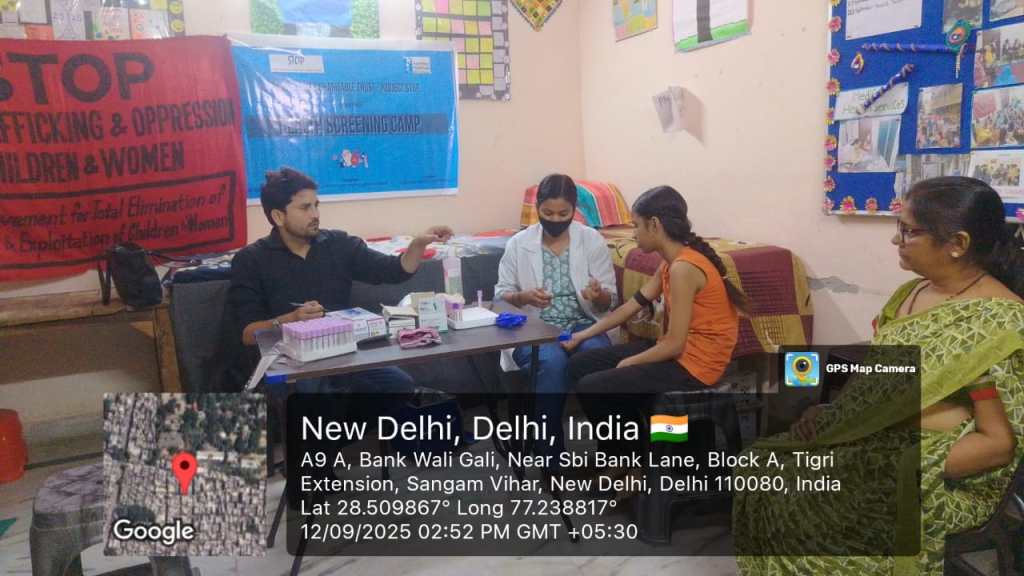
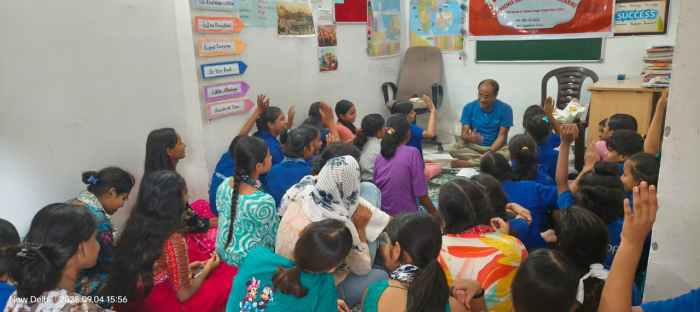
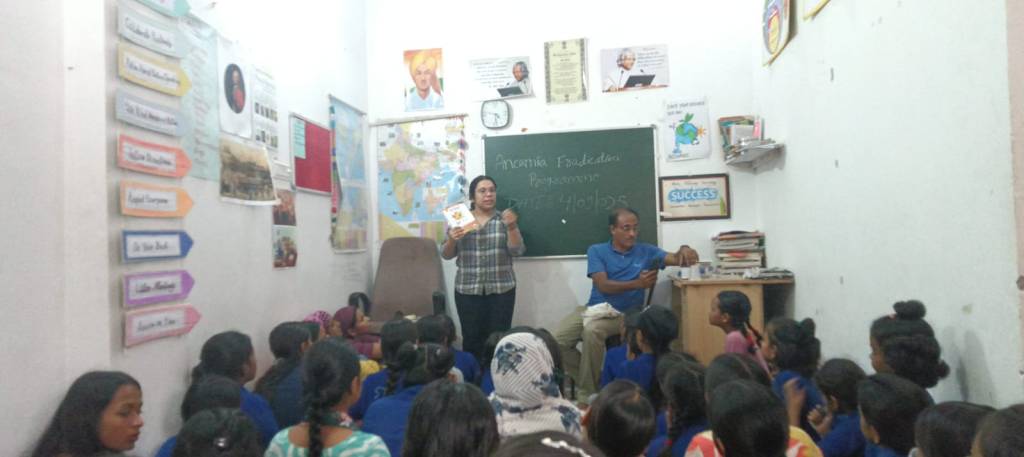
On August 28, 2025, STOP organized the Anemia Eradication Programme, a day dedicated to promoting health awareness and strengthening preventive healthcare in Tigri. The initiative focused on empowering adolescent women with knowledge and resources to combat anemia, a condition that continues to affect the well-being and productivity of many young individuals. The event brought together healthcare professionals and partner organizations committed to building a healthier and more informed community.

Mr. Vishwajeet Ghoshal from the CUF (Children Unbound Foundation), in collaboration with Mosachi, highlighted the significance of grassroots health interventions for young women and the role of nutrition in preventing anemia. The keynote speaker, Dr. Ranjana Bhattacharya, delivered an inspiring address motivating adolescent girls to take charge of their health and say no to anemia through awareness, balanced diets, and self-care.

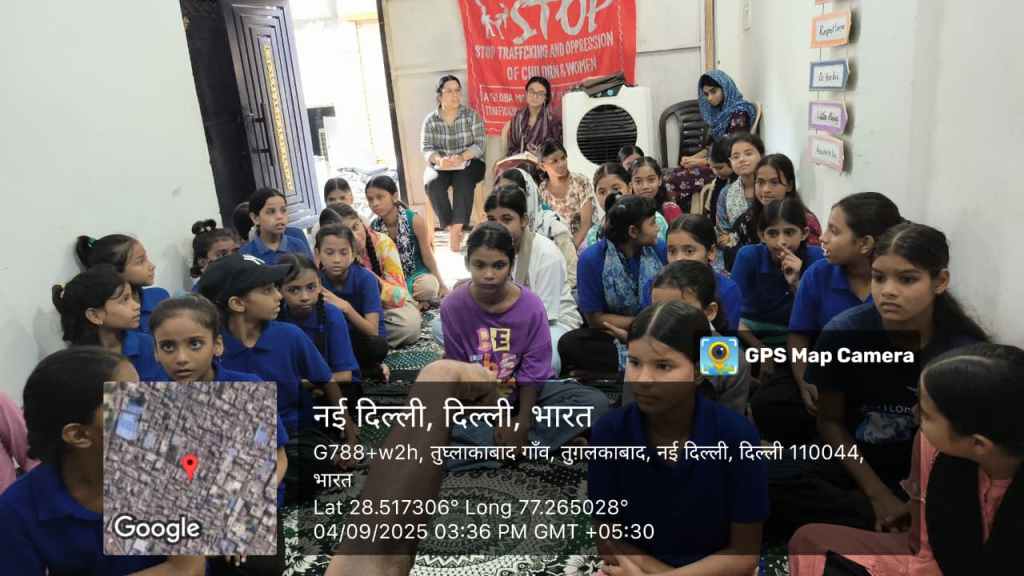
The programme witnessed the enthusiastic participation of around one hundred young women, creating an atmosphere of motivation and solidarity.

Community Interactions with Researcher Carolina Rota

Independence Day Celebrations โ€“ Tigri Community

Tughlakabad Celebrates Independence With Pride

Legal Literacy Programme โ€“ Tughlakabad

๐Ÿ”น Highlights


๐Ÿ”น Main Topics Covered

Exclusive Mentorship Programme for Tigri Students

We are proud to announce a unique mentorship opportunity conducted in Tigri, specially designed for the students of Tigri, led by two distinguished leaders in public service and academia.

Shri Amitava Bhattacharyya

  • Retired IAS Officer
  • Former Chief Information Commissioner
  • Renowned expert in governance, transparency, and public administration

Prof. (Dr.) Ranjana Bhattacharya

  • Retired Professor and Academic Leader
  • Expert in education, leadership, and research methodologies

Why Did Tigri Students Join This Mentorship Programme?

  • Gain first-hand insights into administrative and academic excellence
  • Learn leadership skills from seasoned experts with decades of experience
  • Receive guidance on academic research and professional communication

Rakhis, Smiles, and Togetherness in Tughlakabad

Children and teachers of STOP came together in Tughlakabad to celebrate Raksha Bandhan, making the day a memorable experience for everyone involved. The celebration was filled with laughter, joy, and colorful rakhis, bringing the entire community closer. Students actively participated, tying rakhis on the wrists of their mentors and teachers, symbolizing love, care, and mutual respect.

The event was not just about the festival but also about strengthening bonds of trust and support between children and educators. Many children expressed their excitement while sharing stories and laughter, and teachers joined in with encouragement, creating a warm and inclusive environment. Every rakhi tied represented a promise of care, protection, and guidance, highlighting the values of togetherness within the community.

STOPโ€™s programs aim to create such meaningful experiences regularly, helping children feel supported, nurtured, and motivated to continue learning. Celebrations like Raksha Bandhan also provide an opportunity to build social skills, confidence, and a sense of belonging among the children. Through these activities, STOP reinforces the importance of community, mentorship, and shared experiences in child development.

The Tughlakabad celebration reflects STOPโ€™s commitment to holistic education, not only focusing on academics but also on emotional well-being and cultural awareness. Events like these help children develop interpersonal skills, strengthen teacher-student relationships, and encourage mutual respect and understanding in everyday interactions.

stop participates in ncw’s celebration of world TIP Day

The National Commission for Women (NCW) hosted an impactful event at Vigyan Bhawan, New Delhi, on 30th July 2025, to mark the World Day Against Trafficking in Persons. This gathering brought together experts, law enforcement, and key stakeholders to highlight ongoing efforts and challenges in combating human trafficking across India. STOP was represented by Narayani Bhattacharya, Documentation Officer, and Paridhi Negi, Project Associate.

Inaugural Session Highlights

The event opened with the traditional lighting of the lamp and a felicitation ceremony.

  • Dr. Shivani Dey, Deputy Secretary, NCW, welcomed attendees and stressed the importance of collaboration between government agencies and civil society to fight trafficking.
  • A powerful video on Anti-Human Trafficking (AHT) set the tone for the dayโ€™s discussions.
  • Shri Manoj Yadava, IPS, Director General, Railway Protection Force (RPF), shared that RPF has rescued over 46,000 children to date. He introduced the Vatsalya portal, a database of missing children, and highlighted the Railway Child Help Desk (CHD) and helpline 135, designed to ensure rescued childrenโ€™s protection. He also mentioned helpline 139 for human trafficking calls related to railways.
  • Smt. Vijaya Rahatkar, Honโ€™ble Chairperson, NCW, spoke about the โ€œ4Psโ€ of human traffickingโ€”Prevention, Protection, Prosecution, and Partnership. She highlighted the NCW-RPF Memorandum of Understanding (MoU) signed on the event day and government schemes like Ujjwala Yojna and Shram Rojgar Yojna that support trafficking victims. She also praised RPFโ€™s special operations such as โ€˜Operation Meri Saheliโ€™ and โ€˜Nanhe Farishteโ€™.

Technical Sessions

  • Smt. Naushina Afrin Ali, Senior Advocate, High Court of Chhattisgarh, discussed the legal dimensions of human trafficking and the vital role of law enforcement. She emphasized enforcement challenges and the need for training police personnel on trafficking issues.
  • Shri Swapnil Kishore, Founder and CEO of COVINTS, delivered a detailed presentation titled โ€œInvisible Weapons: Human Trafficking to Terrorism.โ€ Using site maps, he identified trafficking hotspots, including emerging areas like Sylhet, West Bengal. Through compelling case studies, he showed how trafficking networks often link with weapons and drug trafficking, fueling terrorism. His insights called for integrated anti-trafficking and counter-terrorism strategies.

The session concluded with a vote of thanks by Shri Ramawatar Singh, PPS, NCW.

celebrating trafficking in persons day

On 29th July 2025, STOP commemorated World Day Against Trafficking in Persons (TIP Day) with a vibrant and deeply moving community event held within its field intervention areas with an audience of 120 eager women, young girls and children. The celebration served as both a tribute to the courage of survivors and a bold call to action for everyone to combat human trafficking at the grassroots level.

The event opened with a gripping nukkad natak (street play) that laid bare the grim realities of how trafficking operates at the ground levelโ€”from deception to exploitationโ€”urging spectators to recognize the signs and act against it. This was followed by a gripping nukkad natak (street play) stirring dance performance, symbolizing strength, resistance, and the unwavering confidence of communities in standing up against trafficking. A heartfelt poetry recitation encouraged every attendee to take a personal pledge against human trafficking, adding an emotional and reflective depth to the gathering.

Audience members spontaneously stepped forward to share their insights, with many expressing how STOP’s continued efforts have transformed their understanding of traffickingโ€”not just as a crime, but as a systemic issue tied to socio-economic vulnerabilities.

Two distinguished guest speakers added powerful perspectives to the event:

  • Retd. IAS Officer Amitava Bhattacharyya emphasized that while every individual perceives trafficking differently, the collective fight must remain united and uncompromising, as human trafficking is intricately connected to other forms of organized crime.
  • Prof. (Dr.) Ranjana Bhattacharya echoed the call for unity, stating that the strength of our resistance lies in breaking the barriersโ€”legal, social, and culturalโ€”that enable trafficking to persist.

Hosts Manpreet Kaur and Saanvi Rajput, both staff members of STOP, guided the event with empathy and resolve, repeatedly emphasizing the role of small yet profound actions in making communities resilient to trafficking.

Narayani Bhattacharya, Documentation Officer of STOP, shed light on how trafficking infiltrates homes and neighborhoods and underscored the importance of building household-level awareness. She passionately highlighted the cross-border vulnerabilities in Darjeeling, Southern West Bengal, and Uttarakhand, reminding participants of the critical role of mahila mandals and youth groups in identifying and preventing trafficking networks.

Poonam Choudhary, Field Coordinator, and Mamta Gopal, Centre-In-Charge, spoke about the long-term, often irreversible impacts of human trafficking on victims, families, and communities. They urged everyone to take the pledge not just in word but in practiceโ€”by staying vigilant, informed, and united.

The event concluded with a vote of thanks by Paridhi Negi, Project Associate at STOP, who acknowledged the unwavering support of the community, the dedication of STOPโ€™s Founder and staff, and the generosity of the local space-providers who made the day possible.

STOPโ€™s TIP Day celebration was not just a commemorationโ€”it was a reaffirmation. A reaffirmation of solidarity, courage, and the will to dismantle trafficking networks.